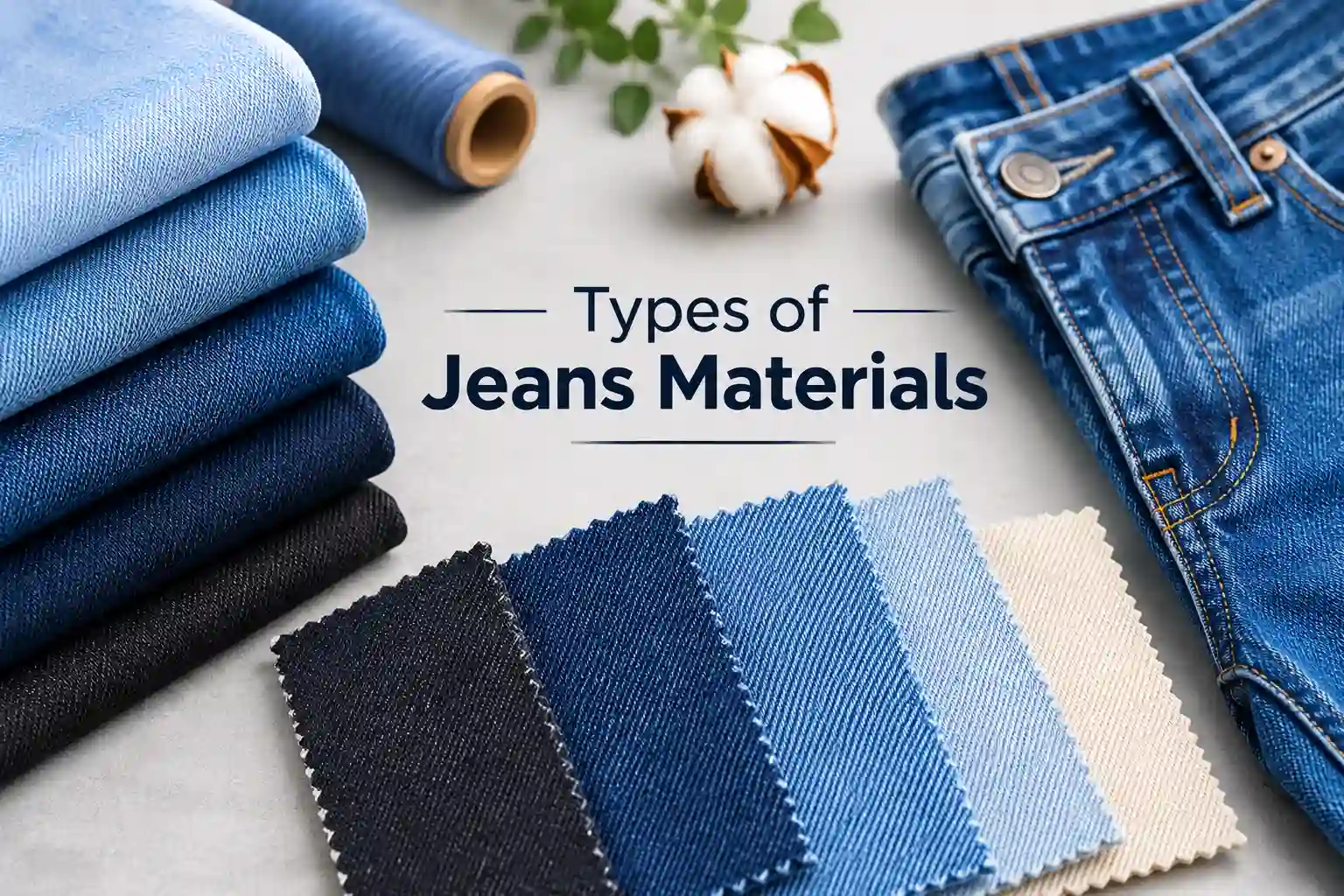
The Types of Jeans Materials used in denim production determine the comfort, durability, stretch, appearance, and overall quality of a pair of jeans. While traditional denim is made primarily from cotton, modern jeans can include elastane, polyester, recycled fibers, linen, and other blended materials. Different materials are selected depending on the desired fit, weight, flexibility, texture, and purpose of the jeans. Understanding the various jeans materials can help clothing brands, retailers, and consumers choose denim products that offer the right combination of style, comfort, and performance.
What Are Jeans Materials?
Jeans materials refer to the fibers and fabric constructions used to produce denim garments. Traditional denim is a sturdy cotton twill fabric recognized for its diagonal weave and durability. However, modern denim manufacturing has introduced many different fiber combinations to improve comfort, stretch, sustainability, and performance.
The material used in jeans affects how the garment feels, how it fits, how quickly it fades, and how well it maintains its shape. Heavy denim can create a structured appearance, while lightweight denim is more comfortable for warmer climates.
Manufacturers can also modify denim through different weaving, dyeing, washing, and finishing techniques. As a result, two pairs of jeans made with similar fibers can still have noticeably different textures and appearances.
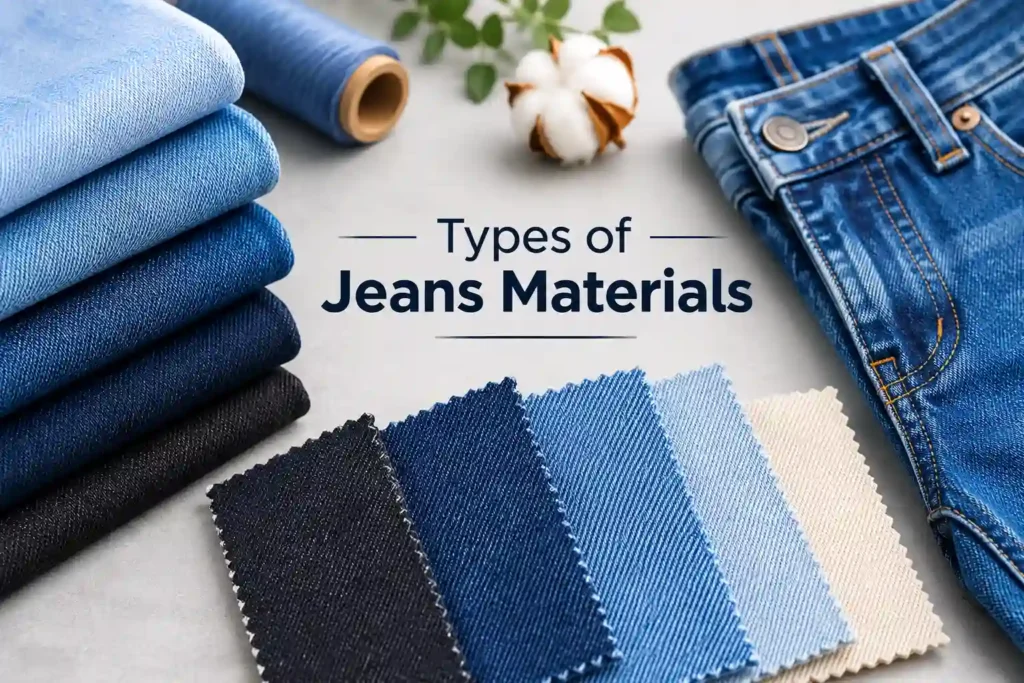
Cotton Denim (Jeans Materials)
Cotton is the most traditional and widely recognized material used in jeans. It provides durability, breathability, and a natural feel that makes it suitable for everyday clothing.
Traditional 100% cotton denim does not have significant natural stretch. This gives jeans a firm structure and allows them to develop unique fading patterns as they are worn.
Cotton denim is available in different weights. Lightweight cotton denim is suitable for summer jeans and casual garments, while heavyweight denim is often used for workwear and durable fashion pieces.
Another advantage of cotton is its versatility. It can be dyed in different shades, including classic indigo, black, gray, white, and various fashion colors.
Cotton-Polyester Denim (Jeans Materials)
Cotton polyester blends combine natural cotton with synthetic polyester fibers. Polyester can improve durability, shape retention, and resistance to wrinkles.
This type of denim may be useful for jeans that need to withstand frequent wear and washing. Polyester can also help reduce shrinkage compared with some 100% cotton fabrics.
The exact ratio of cotton to polyester depends on the desired characteristics. A higher cotton content generally provides a more traditional denim feel, while additional polyester can improve durability and stability.
Cotton-polyester denim is often considered for workwear, uniforms, casual jeans, and affordable mass-market clothing.
Hemp Denim
Hemp is another natural fiber being explored in denim production. It is known for its strength and durability and can be blended with cotton to create distinctive denim fabrics.
Hemp-cotton denim can offer a slightly textured appearance while maintaining the familiar comfort of cotton. As sustainable fashion continues to grow, hemp has attracted attention as an alternative fiber for certain clothing applications.
The final characteristics depend on the quality of the hemp, the blend ratio, and the fabric construction.
Hemp denim can be especially attractive to brands looking to develop collections with natural-fiber stories and distinctive textures.
Tencel and Lyocell Denim
Tencel and lyocell fibers are regenerated cellulose fibers commonly used in modern apparel. They can be blended with cotton to create softer and more fluid denim fabrics.
These materials can improve softness and drape, making them suitable for lightweight jeans, relaxed styles, and fashion-oriented denim.
Lyocell blends can provide a different hand feel compared with traditional rigid denim. They are often selected when a brand wants jeans that feel softer and less structured.
The resulting fabric can combine the familiar appearance of denim with a more comfortable and contemporary feel.
Raw Denim (Jeans Materials)
Raw denim, sometimes called dry denim, refers to denim that has not undergone extensive washing or finishing after dyeing.
Raw denim is generally made from cotton or cotton-rich fabric and is valued for its authentic appearance and ability to develop personalized fading patterns.
The fabric may initially feel stiff, particularly when heavyweight denim is used. With regular wear, it gradually softens and conforms to the wearer’s body.
Raw denim is popular among denim enthusiasts because the fabric develops unique characteristics over time.
Selvedge Denim (Jeans Materials)
Selvedge denim refers to denim made using a tightly woven finished edge, traditionally produced on shuttle looms. The finished edge helps prevent the fabric from unraveling.
Selvedge denim is often associated with premium denim products because of its traditional production methods and attention to fabric quality.
It can be produced in different weights, colors, and compositions. Although selvedge denim is often made from 100% cotton, stretch and blended versions are also available.
The selvedge edge is commonly visible when jeans are cuffed, adding a distinctive detail to the garment.
Lightweight Denim (Jeans Materials)
Lightweight denim is designed for comfort, breathability, and easier movement. It is particularly useful for summer clothing and warmer climates.
Because the fabric is thinner than traditional heavyweight denim, lightweight jeans can feel less restrictive. They may also dry more quickly after washing.
Lightweight denim can be made from cotton, cotton blends, stretch materials, or combinations of different fibers.
Fashion brands often use lightweight denim for wide-leg jeans, relaxed trousers, shirts, denim jeans jackets, and seasonal collections.
Midweight Denim(Jeans Materials)
Midweight denim provides a balance between durability and comfort. It is one of the most versatile choices for everyday jeans.
This type of denim can provide enough structure to maintain the shape of a garment without feeling excessively heavy.
Midweight fabrics are suitable for different seasons and can be used for straight-leg jeans, slim fits, relaxed fits, and many other styles.
For brands developing a versatile denim collection, midweight fabric can be a practical starting point.
Heavyweight Denim(Jeans Materials)
Heavyweight denim is thicker and more durable than lightweight and midweight alternatives. It is often associated with premium raw denim, workwear, and rugged fashion.
Heavy denim provides strong structure and can withstand significant wear. However, it may feel stiff initially and can be less comfortable in hot weather.
Heavyweight denim is particularly useful for consumers who prioritize durability and for brands creating workwear-inspired or heritage collections.
Denim Fabric (Jeans Materials) Finishes
The material is only one factor that determines the final appearance of jeans. Finishing techniques can dramatically change how denim looks and feels.
Common treatments include stone washing, enzyme washing, acid washing, bleaching, whiskering, and softening. These processes can create faded, vintage, distressed, or soft appearances.
Different finishes can also affect the texture and color of denim. Brands should therefore consider both the base material and the finishing process when developing a jeans collection.
Jeans Materials for Clothing Brands
Clothing brands should select denim materials according to their brand identity, customer expectations, and price range. Premium brands may prioritize high-quality cotton, selvedge construction, specialty blends, or sustainable fibers.
Companies developing broader apparel collections can also work with an experienced tshirt manufacturer to coordinate denim products with other casualwear categories.
Brands that sell complete casual and sportswear collections may also work with a tracksuits manufacturer to maintain consistent production standards across different clothing categories.
How to Maintain Different Jeans Materials
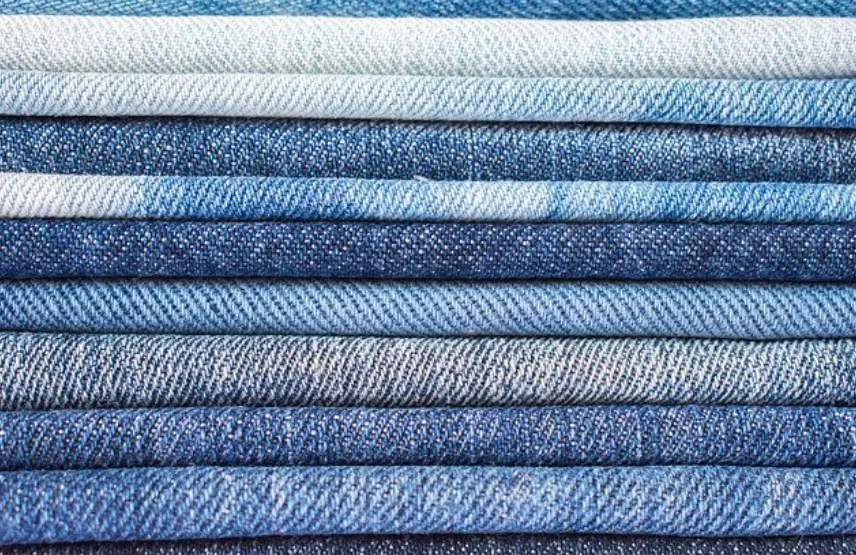
Proper care can extend the life of jeans regardless of their material. Washing requirements vary depending on the fiber composition and finishing process.
Cotton denim may shrink if exposed to excessive heat, while stretch denim can lose elasticity when repeatedly exposed to high temperatures.
Consumers should follow the garment’s care label and avoid unnecessarily harsh washing or drying conditions. Turning jeans inside out before washing can also help protect the outer surface and reduce color fading.
Premium and raw denim may require particularly careful handling to preserve their original appearance.