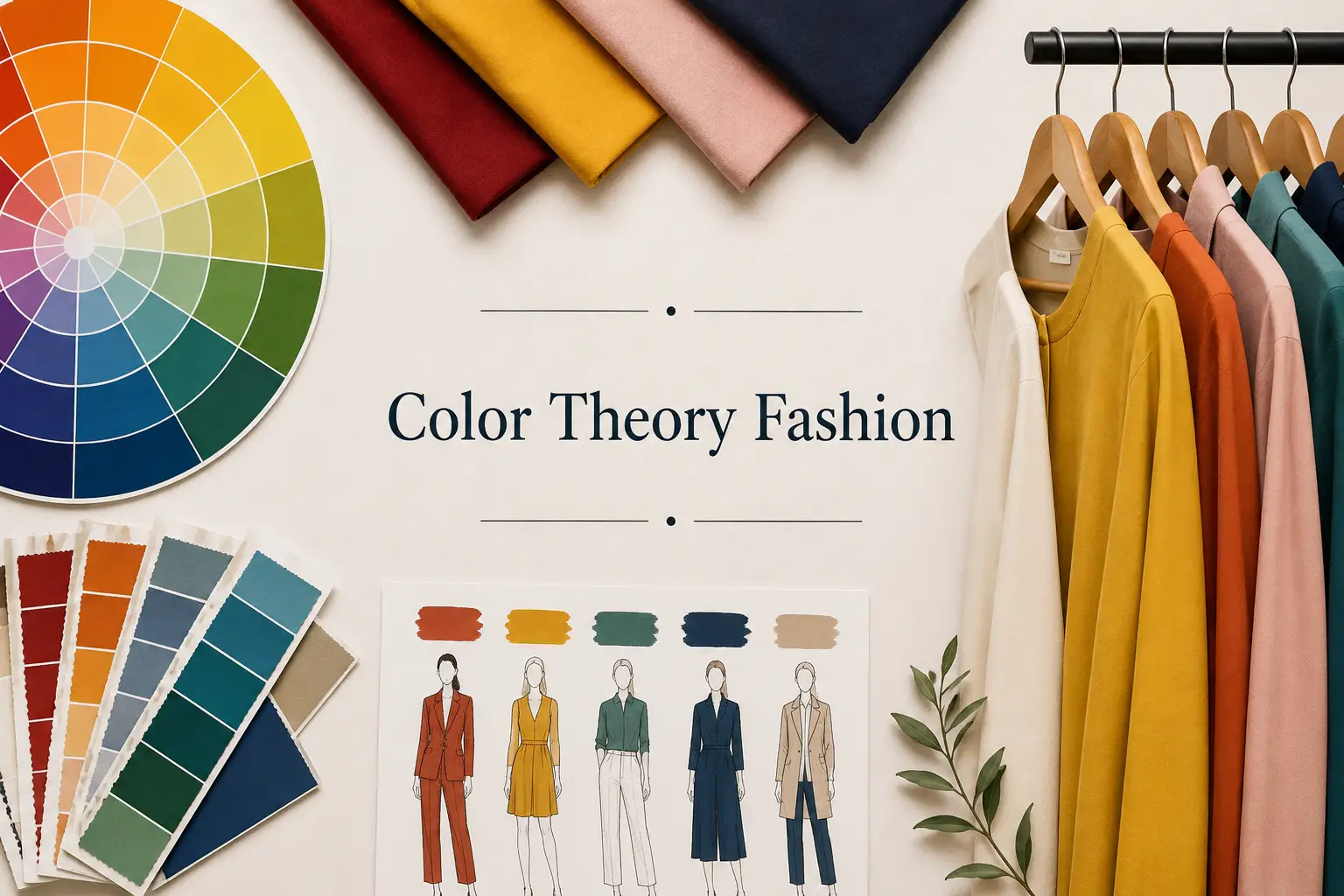
Color Theory Fashion is the study and practical use of color relationships to create attractive, balanced, and visually meaningful clothing and outfits. Color influences how garments look, how collections are perceived, and how customers connect with a fashion brand. Understanding color wheels, warm and cool colors, complementary combinations, monochromatic palettes, analogous colors, and color psychology can help designers create more cohesive collections. Professional fashion color forecasting also plays an important role, with organizations such as the Pantone Color Institute publishing seasonal fashion color reports for designers and the wider industry.
What Is Color Theory Fashion?
Color theory in fashion is a framework for understanding how different colors interact and how they can be combined in clothing. It helps designers decide which colors should dominate a collection, which shades should work as accents, and which combinations create contrast or harmony.
Color is not simply about choosing a favorite shade. A designer needs to consider hue, saturation, value, temperature, fabric texture, lighting, garment shape, and the overall identity of a collection.
For example, a luxury fashion collection may use black, cream, charcoal, and deep brown to communicate sophistication. A sportswear collection might use energetic red, electric blue, or bright green to create a dynamic appearance.
Understanding these relationships makes it easier to build clothing collections that look intentional rather than randomly assembled.
Primary, Secondary, and Tertiary Colors
Primary colors form the foundation of many traditional color systems. These include red, yellow, and blue.
Secondary colors are produced by combining primary colors:
- Red + yellow = orange
- Yellow + blue = green
- Blue + red = purple
Tertiary colors are created by combining primary and neighboring secondary colors. Examples include red-orange, yellow-green, blue-green, blue-purple, and red-purple.
Understanding these categories gives designers a foundation for creating more sophisticated fashion palettes.
Warm and Cool Colors in Fashion
Colors can also be divided into warm and cool categories.
Warm colors generally include reds, oranges, yellows, and some warm variations of brown and purple. They can create energetic, confident, passionate, or inviting impressions.
Cool colors commonly include blues, greens, and blue-based purples. They can communicate calmness, freshness, sophistication, or stability.
However, color temperature is not always absolute. A green can appear warmer or cooler depending on its undertones and the colors surrounding it.
Fashion designers can use temperature to create contrast within an outfit. For example, a cool blue jacket paired with warm brown accessories can create an interesting balance.
Monochromatic Color Schemes
A monochromatic color scheme uses different variations of one basic color. Instead of using multiple unrelated hues, the designer works with different shades, tints, and tones of the same color.
For example, a blue monochromatic outfit might combine:
- Pale blue
- Powder blue
- Medium blue
- Navy
- Deep blue
Monochromatic dressing can create a sophisticated and coordinated appearance. It is particularly useful for minimalist fashion, luxury collections, streetwear, and capsule wardrobes.
The key is to create enough variation through shade, texture, fabric, or silhouette so that the outfit does not look flat.
Analogous Color Schemes
Analogous colors sit next to one another on the color wheel. Examples include blue, blue-green, and green or red, red-orange, and orange.
This type of palette usually creates a harmonious appearance because the colors share related visual characteristics.
Fashion designers can use analogous palettes for seasonal collections where several garments need to work together.
For example, a collection might combine olive green, moss green, and muted yellow-green. These colors can create a natural and cohesive visual identity.
Neutral Colors in Fashion
Neutral colors are essential to many fashion collections. Black, white, gray, beige, cream, brown, and navy can provide a foundation for stronger colors.
Neutrals are useful because they can be paired with almost any accent shade.
For example:
- Black + red creates a bold appearance.
- Cream + brown creates a warm appearance.
- Gray + blue creates a clean appearance.
- Beige + green creates a natural appearance.
- White + navy creates a classic appearance.
Many brands use neutral colors for core products and introduce brighter shades as seasonal or limited-edition accents.
Color Psychology in Color Theory Fashion
Color psychology examines the associations people commonly make with different colors. While individual and cultural interpretations vary, colors can influence the mood a fashion collection communicates.
Red can suggest energy, passion, or confidence. Blue can communicate calmness, reliability, or professionalism. Green is often associated with nature and freshness. Purple can suggest creativity or luxury. Yellow can create an energetic and optimistic impression.
Black is frequently associated with sophistication, authority, and minimalism, while white can communicate simplicity and cleanliness.
Fashion brands can use these associations when developing their visual identity, but they should avoid assuming that every customer will interpret a color in exactly the same way.
Color Theory and Skin Undertones
Color selection can also be considered in relation to skin undertones. Fashion styling commonly divides undertones into warm, cool, and neutral categories.
Warm undertones may work particularly well with earthy colors, warm reds, mustard, olive, cream, and warm browns. Cool undertones can often complement blues, cool greens, jewel tones, and blue-based reds.
Neutral undertones provide greater flexibility.
However, these are guidelines rather than strict rules. Personal preference, contrast, styling, lighting, hair color, accessories, and garment design can all influence how a particular color appears.
1. Grayback International

Grayback International is a custom clothing manufacturer offering apparel production for brands looking to develop customized collections. Its listed capabilities include streetwear, gym wear, sportswear, hoodies, oversized T-shirts, joggers, tracksuits, denim jackets, denim jeans, varsity jackets, and custom cut-and-sew apparel.
For brands applying Color Theory Fashion to a new collection, working with a manufacturer that supports custom development can help translate selected color palettes into finished garments. A brand can specify colorways, fabrics, trims, logos, labels, and other design requirements during product development.
As a broader apparel supplier, Grayback can also support brands that want to expand from one product category into others, whether they need a tshirt manufacturer for core pieces or additional custom apparel for a complete collection.
2. Baagh Enterprises

Baagh Enterprises provides custom clothing manufacturing services for brands developing customized apparel. Its manufacturing approach can be useful for businesses that want to turn specific design concepts, colors, fabrics, and branding requirements into finished garments.
Color planning should ideally be communicated during the development stage rather than after production begins. Brands can provide color references, artwork, fabric specifications, logos, and other details to reduce the possibility of inconsistencies.
Brands expanding their product range can also work with Baagh Enterprises as a hoodie manufacturer, allowing the same carefully planned color palette to be applied across multiple garment categories.
3. DesignTo Clothing

DesignTo Clothing provides custom apparel development and manufacturing for brands, including fabric guidance, sample development, decoration, labels, packaging, and low-MOQ production support. Its website states that production starts from 30 units per style and color for its standard MOQ.
For brands developing color-focused collections, its development process includes fabric and material decisions, making it relevant for businesses that want to evaluate how colors appear on particular fabrics.
4. AVMADE
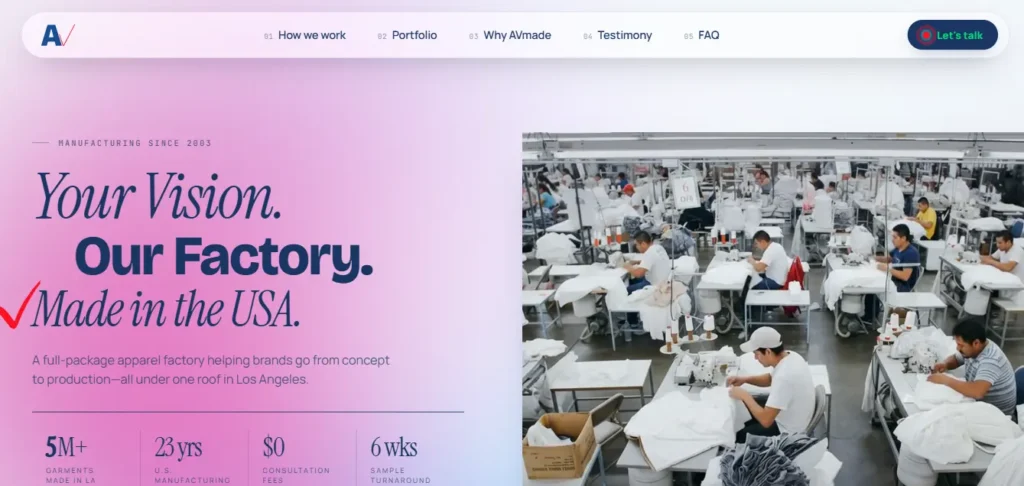
AVMADE is a Los Angeles-based full-package clothing manufacturer offering custom apparel production and clothing-line development. Its process includes design development, technical drawings, measurements, colorways, material callouts, and finishing details.
This development-focused approach is useful for brands that want their color palette incorporated into technical product specifications before manufacturing begins.
5. Tampa Clothing Company
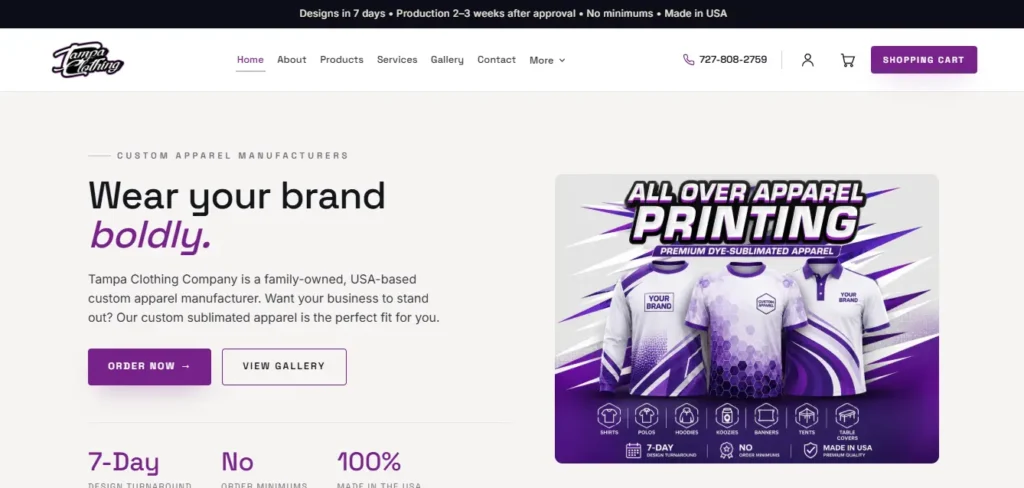
Tampa Clothing Company is a Florida-based apparel manufacturer that states its products are designed and manufactured in the USA. The company offers custom apparel and full-color dye sublimation, with no minimum order stated on its website.
Its production model can be relevant to brands interested in vibrant, highly customized color applications, particularly for sportswear and graphic apparel.
How to Choose Colors for a Fashion Collection
Start by selecting the overall mood of the collection. Ask what you want customers to feel when they see the garments.
Then select a dominant color and build supporting shades around it.
A practical palette might contain:
- 1 dominant color
- 2 supporting colors
- 1 accent color
- 2 neutral colors
This prevents the collection from becoming visually chaotic.
For example, a contemporary autumn collection could use deep brown as the dominant shade, olive and muted orange as supporting colors, burgundy as an accent, and cream and charcoal as neutrals.
How to Use Trends In Color Theory Fashion
Fashion color trends can provide inspiration, but brands should avoid changing their entire identity every season.
Pantone’s Fashion Color Trend Reports are designed to highlight seasonal colors expected to appear in fashion collections. Its Spring/Summer 2026 London report, for example, identifies ten standout colors and six seasonless shades.
A better strategy is to maintain your core brand colors and introduce selected trend colors as seasonal accents.
For example, a brand whose identity is based around black, cream, and navy could introduce one seasonal green or red without completely changing its visual identity.